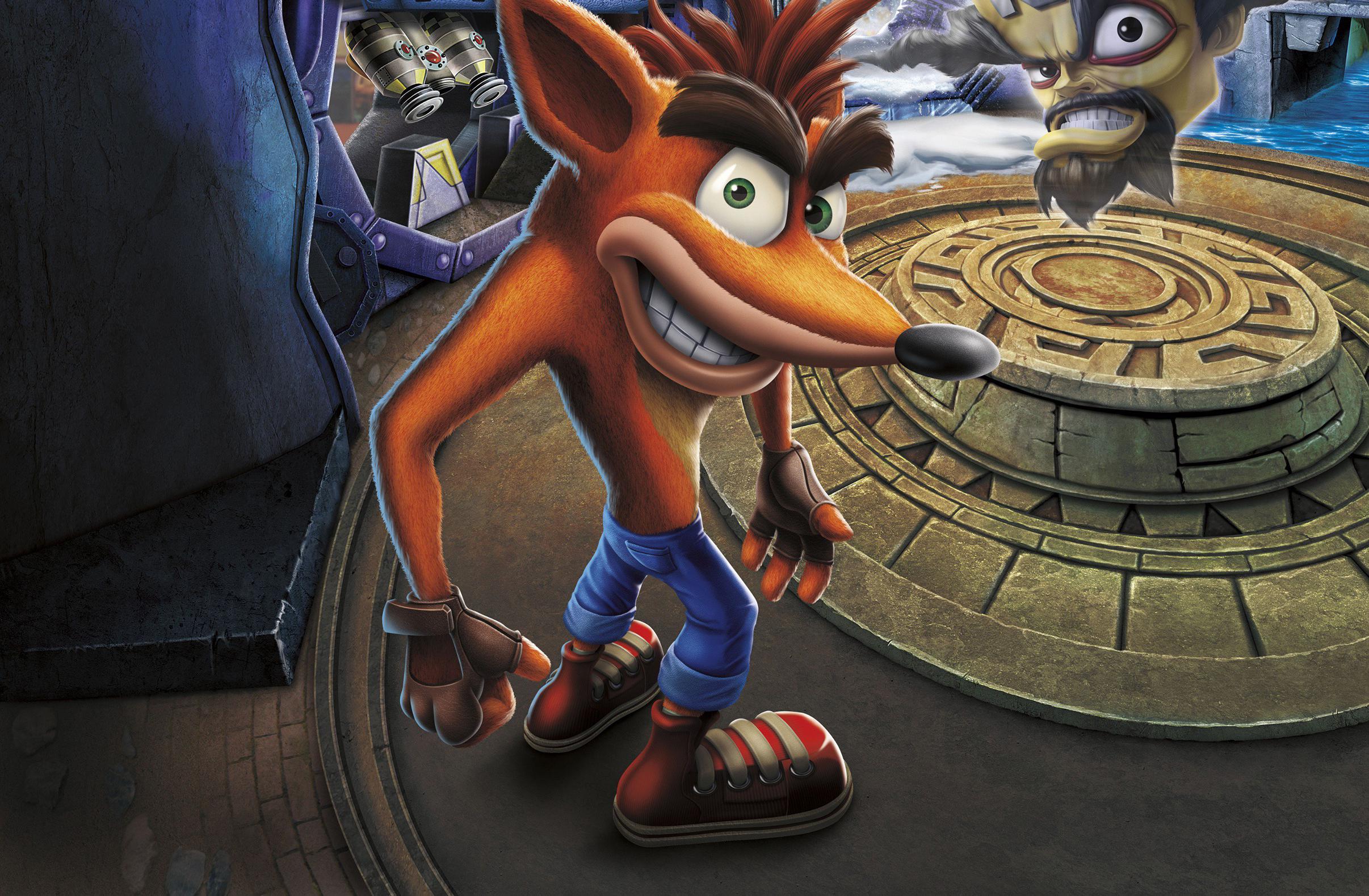
Crash Bandicoot 2: Cortex Strikes Back199712 factsNaughty Dog · Universal Interactive StudiosGame page →Andy Gavin wrote a brand-new engine for the sequel called GOOL 2 — Game-Oriented Object LISP 2, a custom dialect of LISP. It ran three times faster than the first game's engine, handled ten times the animation frames and twice the polygon count.en.wikipedia.orgThe whole game was built in 13 months on a $2 million budget, with production starting in October 1996 — barely a month after the first Crash Bandicoot shipped.en.wikipedia.orgThe jungle levels were meant to have ground fog, but Naughty Dog dropped it: magazines and players had started calling out other developers for using fog to hide low polygon counts, and the team did not want the association.en.wikipedia.orgA death animation that squashed Crash down to a stunned head and a pair of feet was changed for the Japanese release. It resembled too closely the severed head and shoes left by a serial killer active in Japan at the time.en.wikipedia.orgThe IGDA regards the playtesting done on Crash Bandicoot 2 as the moment the field of Games User Research came of age.en.wikipedia.orgDan Arey, lead designer of Gex: Enter the Gecko, joined Naughty Dog while the game was in alpha in August 1997 and streamlined its level design.en.wikipedia.orgThe team wrote a flat-plane z-buffer specifically for this game so water and mud could sit perfectly level on the Y-axis. The trade-off was strict: no waves, no odd angles, and it could only be applied to a handful of foreground objects at once — Crash himself, a few enemies and a few crates.en.wikipedia.orgBob Rafei led concept development, art direction, level assembly and vertex lighting. He later became Naughty Dog's art director on the Jak and Uncharted series.en.wikipedia.orgThe sewer levels exist because the team wanted somewhere deliberately dirty in the game, and added colour contrast to break up the monotony of the pipes.en.wikipedia.orgIt reached 1 million units in the United States, 800,000 in Japan and 340,000 in Europe by late February 1998, and NPD ranked it the ninth best-selling game of 1998.en.wikipedia.orgIts digital re-release was a false start. The game arrived on the European PlayStation Network on 26 July 2007 and was pulled twelve days later as a precaution when Spyro 2 and MediEvil hit technical problems; North America got it in January 2008, and Europe only got it back in February 2011.en.wikipedia.orgMark Cerny produced it — the same Mark Cerny who would go on to be lead system architect of the PlayStation 4 and PlayStation 5.en.wikipedia.orgRead 10 more facts
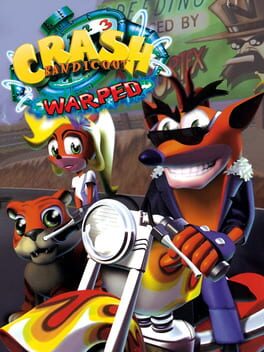
Crash Bandicoot: Warped19987 factsNaughty Dog · Universal Interactive StudiosGame page →By 2002 Warped had sold over 5.7 million units worldwide, making it the thirteenth best-selling PlayStation game of all time.en.wikipedia.orgIt was the first non-Japanese PlayStation title to sell more than a million copies in Japan, and the first to be given a "Platinum Prize" there for doing so.en.wikipedia.orgAndy Gavin, Stephen White and Greg Omi wrote three entirely new gameplay engines for this game: two 3D ones for the airplane and jet-ski levels, and a third built like a driving simulator for the motorcycle levels.en.wikipedia.orgThose three new engines account for only about a third of the game. The other two-thirds still run on the engine carried over from the first two Crash games.en.wikipedia.orgJason Rubin directed and wrote it, Josh Mancell returned to score it, and the art was led by Bob Rafei and Charles Zembillas — the same core that had shaped the first two games.en.wikipedia.orgIt released in North America on 3 November 1998, almost exactly a year after Cortex Strikes Back, and reached Europe that December.en.wikipedia.orgMetacritic records "universal acclaim" for it — the strongest critical reception of Naughty Dog's original PlayStation Crash trilogy.en.wikipedia.orgRead 5 more facts